Pandan: The South-East Asian Vanilla Most Australians Haven't Tasted
Green, fragrant, and everywhere across South-East Asia — pandan is the flavour the Australian dessert scene has been waiting for.
Ask someone in Malaysia, Indonesia, the Philippines, or Thailand what their kitchen smells like when something delicious is being made, and chances are pandan will come up. The long, blade-like green leaves of the Pandanus amaryllifolius plant are one of the defining flavour pillars of South-East Asian cooking — used in everything from rice to cakes to ice cream — and yet most Australians outside those communities have never encountered it.
What does pandan taste like?
Pandan is soft, floral, and gently sweet with a subtle grassy undertone that grounds it. It is often described as "the vanilla of South-East Asia" — not because it tastes like vanilla, but because it serves a similar cultural and culinary function: it is the baseline fragrance that says "this is a dessert" across an entire region. Where vanilla is warm and round, pandan is brighter and more herbaceous. Where vanilla reads as familiar, pandan reads as somewhere else entirely.
The aroma is the thing. Raw pandan leaves smell extraordinary — green and fragrant in a way that is genuinely hard to describe if you have never encountered it. Cooked into a custard or baked into a cake, that fragrance mellows slightly and integrates into the broader flavour in a way that is deeply satisfying.
Where pandan is used across South-East Asian cuisines
In Malaysia and Singapore, pandan is the essential ingredient in kaya — the coconut jam spread on toast that is the cornerstone of the kopitiam (traditional coffee shop) breakfast. Pandan leaves are tied in knots and simmered with rice to perfume it with their fragrance. Pandan cake, a light chiffon baked with fresh pandan juice, is one of the most beloved cakes across South-East Asia.
In Indonesia, pandan is used in onde-onde (glutinous rice balls filled with palm sugar), dadar gulung (green pancakes rolled around coconut filling), and countless rice cakes and puddings. In the Philippines, it appears in buko pandan — a refreshing dessert of young coconut and pandan jelly that is a staple at parties and gatherings.
The common thread is coconut. Pandan and coconut are one of the great flavour pairings of South-East Asian cuisine — they complement each other in a way that feels almost inevitable. The floral, herbaceous note of pandan brings out the richness of coconut, and the coconut's fat softens pandan's grassy edge.
Why hasn't pandan broken through in Australia sooner?
The honest answer is that South-East Asian cuisines have been significantly undervalued in mainstream Australian food culture relative to their quality and the size of the communities who have kept them alive here. Vietnamese, Indonesian, Malaysian, Filipino, and Thai communities in Australia have been cooking with pandan for decades — in homes, in community centres, in family-run restaurants and bakeries that have never received the recognition they deserved from the broader food media.
That is changing. The same forces driving the visibility of ube and Vietnamese coffee are at work with pandan — social media, a more adventurous dining culture, and a generation of food writers and cooks who are genuinely curious about flavours beyond the Western European tradition. Pandan is not a new ingredient; it is simply new to a particular audience.
How we built our Pandan Coconut Cookie
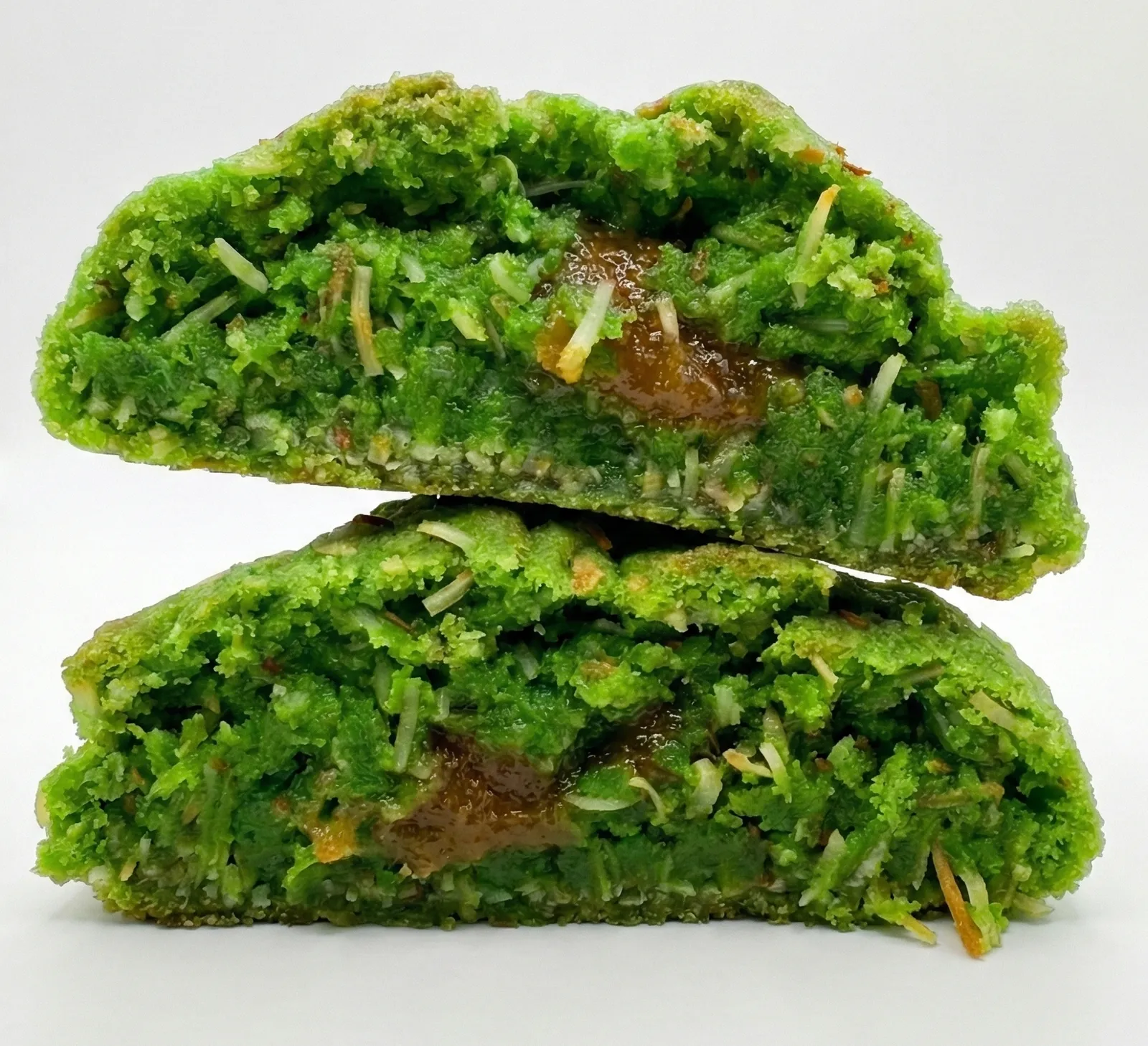
Our Pandan Coconut Cookie is built around that classic pandan-coconut pairing. The cookie is a thick, gooey base with a pandan-scented filling and a generous roll in toasted coconut flakes that provides both texture and a second hit of coconut flavour on the outside.
The green colour, when you see it, is not artificial — it comes from the pandan itself. Real pandan juice produces a vivid green that is quite striking in a cookie context. We leant into it rather than dialling it back, because the colour is part of what makes pandan so distinctive and so recognisable to anyone who grew up eating it.
We care deeply about accuracy with these flavours. Pandan extract (the bottled version available at Asian grocery stores) gives you the fragrance but misses the full complexity of the fresh leaf. We work with our supplier to use a preparation that captures as much of the real thing as possible, because anything less would not do justice to the ingredient or the culinary tradition it represents.
Find out more about where these flavours come from and what drives our approach on our story page.
Frequently asked questions
What does pandan taste like?
Pandan has a soft, floral, gently sweet flavour with a subtle grassy undertone. It is often described as the South-East Asian equivalent of vanilla in terms of its cultural role — a baseline fragrance for desserts — but its actual flavour is quite different: brighter, more herbaceous, and with a distinctive green fragrance that is immediately recognisable once you know it.
Is pandan the same as vanilla?
No — pandan is sometimes called "the vanilla of South-East Asia" because of its widespread use as a dessert flavouring across the region, but its actual flavour is quite different. Vanilla is warm, round, and familiar to most Australians. Pandan is greener, more floral, and has a herbaceous note that vanilla lacks. They are both excellent, and they are not interchangeable.
Where can I buy pandan in Australia?
Fresh pandan leaves are available at most Asian grocery stores in Australia, particularly in areas with significant South-East Asian communities. Pandan extract (a bottled concentration) is also widely available and is the most convenient option for everyday use. Frozen pandan leaves are another option if you cannot find fresh.
What does pandan pair well with?
Pandan's closest and most natural partner is coconut — a combination found throughout South-East Asian dessert traditions. It also pairs well with condensed milk, palm sugar, rice, and glutinous rice flour. In a Chip cookie context, we pair it with toasted coconut flakes on the outside for texture and a pandan-scented filling inside.
Can I order a Pandan Coconut cookie for delivery?
Yes — we deliver across Australia. You can order our Pandan Coconut cookie individually or as part of a custom box through our Build a Box page. We bake fresh and ship with overnight delivery to keep the cookies in peak condition.
Ready to taste it?
Chip Bakehouse — delivered fresh across Australia.