Matcha + Strawberry: Why The Pairing Works (And How We Built A Cookie Around It)
Earthy and bright. Bitter and sweet. The flavour science behind one of our most popular combinations.
Some flavour pairings make immediate, intuitive sense — chocolate and caramel, vanilla and brown butter, citrus and cream. Matcha and strawberry is not one of those pairings. It sounds a little eccentric on paper: a deeply savoury, grassy green tea powder alongside a bright, acidic summer fruit. And yet, the first time you taste them together properly, something clicks.
Why does matcha and strawberry taste so good together?
The answer is contrast. Matcha is dominated by umami and bitterness — those qualities come from L-theanine and catechin compounds that give high-grade matcha its characteristic depth. Strawberry brings a high-acid brightness and a sweetness that reads as almost effervescent. When they meet in the same bite, each quality amplifies the other: the bitterness makes the sweetness more vivid, the brightness makes the earthiness feel grounded rather than heavy.
There is also a colour dimension worth noting. Matcha's vivid green and strawberry's red-pink sit on opposite sides of the colour spectrum, which means visually they create a striking contrast that the flavour contrast then delivers on. You see it coming before you taste it.
A brief history of matcha in Australian dessert culture
Matcha has been part of Japanese culinary tradition for centuries — originally consumed as a ceremonial beverage in the form of whisked powdered tea, it eventually found its way into wagashi (traditional Japanese confectionery), ice cream, and countless other sweet applications. It arrived in Australian food culture primarily through Japanese restaurants and Japanese-influenced dessert bars, initially concentrated in areas with significant Japanese and broader East Asian communities.
The crossover into mainstream cafe culture happened roughly between 2015 and 2020, when matcha lattes became a fixture of the urban cafe menu. From there, matcha found its way into cakes, cookies, chocolates, and eventually into the sort of mass-market products (KitKats, Tim Tams in limited edition form) that signal genuine mainstream penetration.
Matcha is now comfortably established in the Australian food landscape — not as a novelty but as a genuine ingredient with a committed following. The pairing with strawberry represents the next evolution: taking a familiar ingredient and putting it somewhere genuinely unexpected.
How we developed two different matcha cookies
We have approached the matcha brief from two different directions at Chip. Our Matcha White Choc Cookie leans into the classic pairing — the bitterness of matcha balanced against the creamy sweetness of white chocolate, which has enough fat and sweetness to tame the matcha's edge without smothering it.
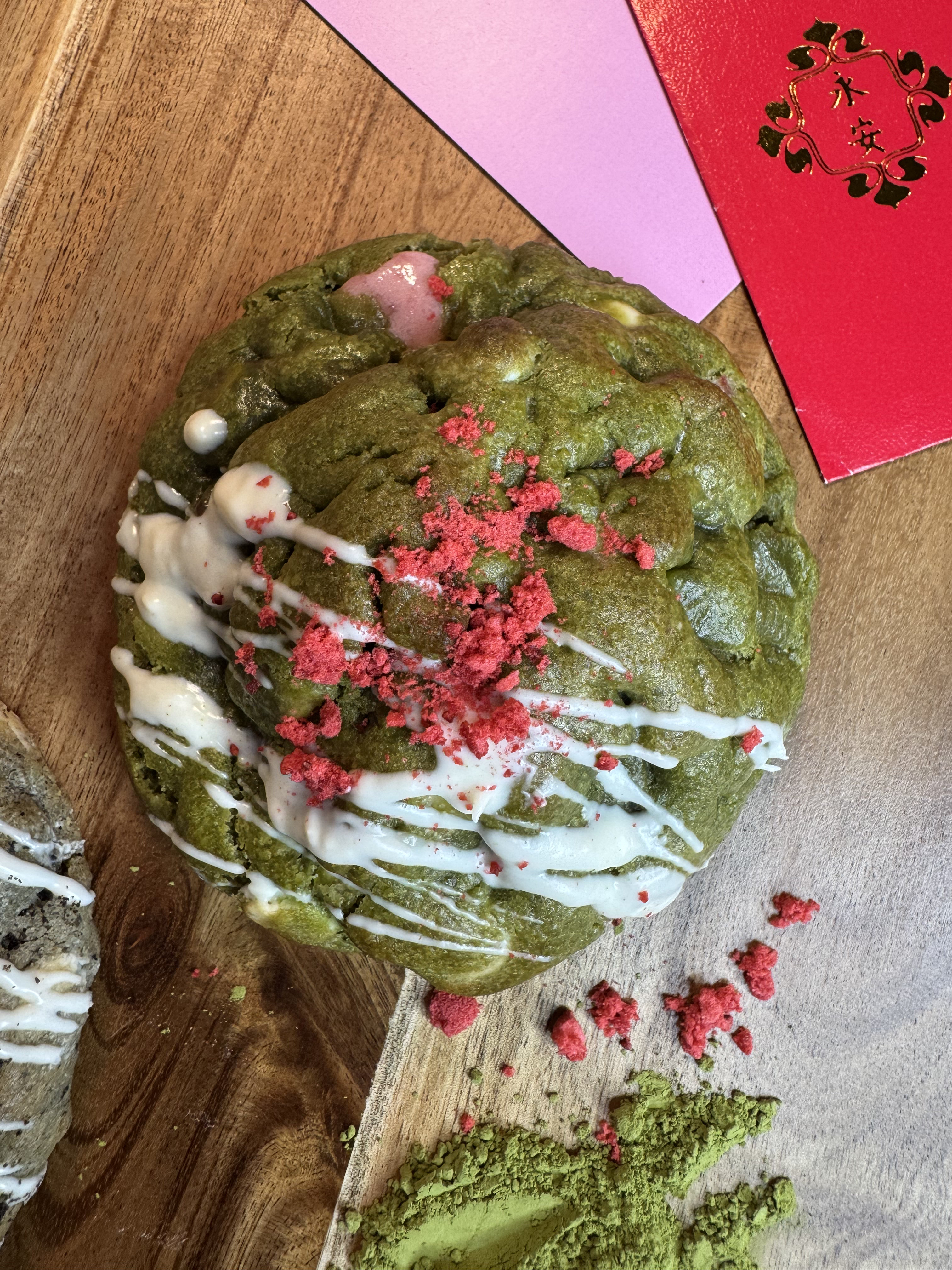
Our Strawberry Matcha Cookie takes a different approach — here, the strawberry is the primary flavour partner, and the matcha plays a supporting role. The result is a cookie that leads with brightness and freshness before the earthy, slightly bitter matcha note comes through in the finish. It is a more unexpected sequence of flavours and one that tends to surprise people who expect the matcha to dominate.
What grade of matcha matters for baking?
This is a question that matters more than most people realise. Ceremonial grade matcha — the finest grade, used for traditional tea preparation — has a delicate, complex flavour that can be overwhelmed by sugar and fat in a baked context. Culinary grade matcha, by contrast, is specifically designed to hold its flavour and colour through the heat and competing ingredients of baking.
We use a culinary grade matcha sourced specifically for flavour intensity and colour stability. The bright green you see in our cookies is not a trick of photography — it is a function of using quality matcha and being careful about how we incorporate it. Cheap matcha turns grey and tastes flat in a baked cookie. Good matcha stays vivid and delivers on flavour.
If you would like to taste the difference for yourself, build a box with our matcha cookies and judge for yourself. We are fairly confident the colour and flavour will speak for themselves.
Frequently asked questions
Why do matcha and strawberry taste good together?
The pairing works because of contrast: matcha is earthy, bitter, and umami-forward, while strawberry is bright, acidic, and sweet. Each quality amplifies the other — the bitterness makes the sweetness more vivid, the brightness makes the earthiness feel grounded. It is the same logic that makes dark chocolate and raspberry work so well together.
What is the best matcha to use for baking?
Culinary grade matcha is generally best for baking — it is designed to hold its flavour and colour through heat and competing ingredients. Ceremonial grade matcha can work but its delicate complexity is often lost in baked goods with high sugar and fat content. Look for a matcha that is a vivid green rather than a dull olive colour, which indicates freshness and quality.
Does Chip Bakehouse have both matcha and strawberry matcha cookies?
Yes — we have two distinct matcha cookies. Our Matcha White Choc Cookie pairs matcha with white chocolate in the classic combination. Our Strawberry Matcha Cookie leads with the strawberry-matcha pairing. Both are available through our Build a Box page, subject to the current episode lineup.
Is matcha available in Sydney?
Matcha is very widely available in Sydney — at Japanese grocery stores, specialty tea shops, most Asian supermarkets, and increasingly at mainstream supermarkets. Quality varies significantly between brands, so it is worth sourcing from a reputable tea supplier if you are particular about flavour.
What flavours pair well with matcha?
Matcha's best partners tend to be flavours that can either contrast with its bitterness (strawberry, raspberry, yuzu, lemon) or complement its earthiness (white chocolate, cream cheese, red bean, black sesame). The pairing with strawberry is particularly effective because of the strong contrast between earthy-bitter and bright-acidic.
Ready to taste it?
Chip Bakehouse — delivered fresh across Australia.